This article was produced in partnership with South Side Weekly, with support from the Wayne Barrett Project.
Puede leer este artículo en español aquí.
CHICAGO — When the Venezuelan woman arrived in the city in December 2023 with her three children, she was looking for stability and a path to legal status. A friend referred her to a man who claimed he could handle asylum applications. Trusting him, she paid him $500 to file paperwork for herself and her children.
Only later did the woman, who spoke to the South Side Weekly and Type Investigations on the condition of anonymity because of her immigration status, discover that the asylum application had been mishandled, leaving her unable to obtain a work permit.
“When it was time to get the work permit, it turned out that the asylum application he submitted was wrong,” she said. “Very, very wrong.”
Unable to work legally, she has sometimes taken under-the-table jobs to support her family. And instead of the stability and peace of mind that might have come from quickly obtaining a work permit, the woman said the precarity of her situation has caused her a great deal of stress.
“I’m a mother responsible for three children, I’m on my own, and it’s affected me a lot economically,” she said.
In a months-long investigation, the Weekly and Type Investigations found that immigrants seeking a legal path to residency or citizenship must navigate a confusing landscape of immigration services providers. Some businesses that are otherwise legitimate tax-preparers or notary publics can misrepresent what services they’re legally allowed to offer, skirting the line between chatting about immigration options and offering legal advice they’re not licensed to provide. And scammers can abscond with victims’ money after failing to provide promised services they weren’t authorized to perform—or even threaten immigrants to extract money from them. Enforcement is inconsistent from one state to the next, and fraudsters who rack up complaints sometimes relocate or rename their businesses to avoid accountability.
Michael Wildes, managing partner at Wildes & Weinberg, P.C., a major immigration law firm in New York City, said while it may seem that filling out immigration forms is an innocuous job that can be performed by non-attorneys, when notarios give people bad, inconsistent, or outdated advice with regards to which status to apply for with U.S. Citizenship and Immigration Services (USCIS), the forms they submit “can never be wiped off.”
“A person can never say, ‘I didn’t know what I did.’ You ultimately have responsibility,” Wildes said. “Ignorance of the law and making a mistake or choosing the wrong professional stays with you in the immigration space.”
This type of fraud is pervasive in part because of a misconception that notarios, or notaries, in the U.S. are lawyers, as is the case in many Latin American countries. In Mexico, for instance, a notary public must have a law degree, spend time working for another notary public, and pass a rigorous exam. Highly accredited, such Mexican notarios are able to offer legal advice and a wide array of legal services.
In the U.S., by contrast, notary publics are only allowed to notarize documents and signatures, transcribe responses, or translate the instructions, questions, or answers on government forms.
While many scams are tied to notarios, they are not the only bad actors. Some people present themselves as trustworthy acquaintances who claim to know how to navigate the immigration system. Increasingly, fraud also happens remotely, through phone calls, social media, or messaging apps, where scammers impersonate police or immigration officials to demand money.
Since 2015, dozens of people in Illinois have filed complaints with the state attorney general alleging they were defrauded in immigration cases, with losses totaling nearly $200,000, according to records obtained by the Weekly and Type Investigations from the AG’s office.
More than half of that amount was attributed to two women from Chicago and Melrose Park, IL. According to ten complaints, they targeted people from 2022 to 2023, allegedly charging between $6,000 and $25,000 for assistance with green card applications—and sometimes warning victims that if they spoke about their practices, they risked deportation.
Several complaints indicate that one of the women falsely claimed to work for immigration authorities, and knew some of the immigration “higher ups,” relying on word-of-mouth referrals to find new clients. In some cases, one would refer people directly to the other, or friends and family members would connect individuals to them.
One 2023 complaint described how one of the individuals was introduced to a victim through a personal referral and presented herself as someone who “worked closely with immigration” to secure green cards. The scammer “guaranteed that I would receive my work permit within the year and get my green card within two years once I gave her all the money for the service in cash,” the complaint states.
“She told me I couldn’t speak to anyone about it or she would have me deported. She then disappeared for about a year and I never received my work permit. In July, she called me to set up a meeting and demanded $2,000 more or else my green card process would terminate. I met her at a McDonald’s with my brother-in-law, who she was also helping, and gave her the money.”
The Illinois attorney general’s office declined to answer questions about the status of these complaints or whether the office had taken any action in response to them.
Blurring the line between information and advice
“Some of these notarios partner with licensed attorneys,” said Gina Amato Lough, the directing attorney of Public Counsel’s Immigrants’ Rights Project in Los Angeles. “So what they’ll do is take the person’s money, do all the paperwork, but then, of course, they can’t show up to court. So they’ll partner with a licensed attorney who will then show up to court and do the hearing.”
However, this model can make it difficult for clients to understand when the work crosses the line from legitimate clerical help—the kind of thing that paralegals in law firms do all the time, for example—into the unauthorized practice of law.
“Paralegals will do consultations, that’s not a problem. They’ll do intakes, but it’s under the supervision of an attorney,” Amato Lough said.
Immigration services providers who give legal advice without a license risk injunctions, fines, criminal charges, or consumer fraud penalties, or criminal charges under state law, and the attorney general can seek to suspend or revoke a business’s authority to operate. For clients, the stakes are higher: They may lose thousands of dollars, face deportation or permanent bars from relief if the wrong forms are filed, unknowingly commit perjury, and lose valuable time in their cases.
In Franklin Park, a suburb of Chicago, Servicios Leyva advertises itself as offering assistance with immigration cases and tax preparation. Though the fine print on the company’s website notes that it is not a law firm and cannot provide legal advice, it can sometimes be difficult for clients to understand the distinction between simply offering information and providing legal guidance—especially Spanish-speaking immigrants with little knowledge of the U.S. legal system. “We are honest and up front and help you through your immigration process towards your path to citizenship,” Servicios Leyva’s website states.
Weekly reporters visited three such businesses in the Chicago area in order to understand how they operate. (The businesses are not connected with the two women from Chicago and Melrose Park.) Posing as prospective clients, we brought specific information about María, a real person, who was seeking guidance on how to become a U.S. resident.
On a summer weekday, we spoke to a secretary-assistant at Servicios Leyva who radiated warmth and calm, and listened closely to the details shared. She outlined how María could possibly become a legal resident through a trámite consular and a waiver since she is married to a U.S. citizen, and estimated the process would stretch over four years.
The woman, who is not an attorney, said that she or her colleague could handle all the paperwork themselves, without the need for a lawyer. She did hand over the business card of a lawyer to call in case of emergencies, such as if María were to be detained or needed to appear in immigration court.
She asked detailed questions about María’s immigration history, including whether she had ever been deported, and gave us a list of documents to bring in to start the case, including photos and a marriage certificate.
The consular processing would take about a year, she explained. For that, she said the USCIS fee was $675, and Servicios Leyva would charge $990 to prepare and file the paperwork—a total of $1,665.
Because María had entered the United States without authorization, the woman said she would also need to apply for a waiver of unlawful presence, which could add another three years to the process. She quoted the government fee for the waiver at $795, while Servicios Leyva’s service fee would be $950, bringing the total to $3,410 in fees to both USCIS and Servicios Leyva.
Providing legal guidance about an immigration case falls outside the bounds of what notaries are allowed to do under Illinois state law. According to the Illinois Notary Public Act, notaries who are not attorneys or Department of Justice-accredited representatives are prohibited from providing immigration legal services or offering advice that requires legal judgment. Immigration services providers must be registered with the state attorney general. They are allowed to perform only very limited tasks: They can hand out legal materials and blank forms, type or file paperwork exactly as instructed by the client, and serve documents on other parties. But they cannot advise which forms to use, recommend what kind of immigration relief to pursue, or provide any other legal advice.
Immigration services providers in Chicago must also obtain a license from the city’s Department of Business Affairs and Consumer Protection (BACP). The city’s rules for the type of services these businesses can provide are similarly restrictive.
Federal authorities make a similar point: USCIS guidance states that only licensed attorneys and DOJ-accredited representatives, not notarios, may give immigration legal advice. In some cases, law students and law school graduates can do the same.
Representatives of Servicios Leyva did not respond to a request for comment.
At Agencia Y Notaria Cadena in Chicago’s Back of the Yards neighborhood, the owner’s son provided his father’s cell phone number to a Weekly reporter seeking help for María. In a call a few days later, Roger Cadena, the owner, said that while a lawyer would handle the waiver portion of the case, he could prepare the initial paperwork himself, and outlined a multistep immigration process. He recommended starting with an I-130 petition for family sponsorship, which he said he would prepare himself, as well as an Affidavit of Support. In total, he estimated the entire process would cost around $7,000, spread out over several years. Cadena is not an immigration attorney.
“We help people,” Cadena said in a follow-up call with a Weekly reporter in November. “We’re licensed to do immigration.” Agencia Y Notaria Cadena is registered as an immigration services provider with the city. But like other such businesses, it may not offer legal advice.
In a subsequent email, Cadena said that as a notary public, he could not handle the case directly, and recommended consulting with an attorney. “I was giving you information on my opinion (not advice) on how the process goes,” he said. The conversation, he said, was intended simply to gather information about the case. “I have to know what my possible client situation is to see if I can offer limited immigration services,” he said. “Any additional services or questions you would have to consult with an attorney.”
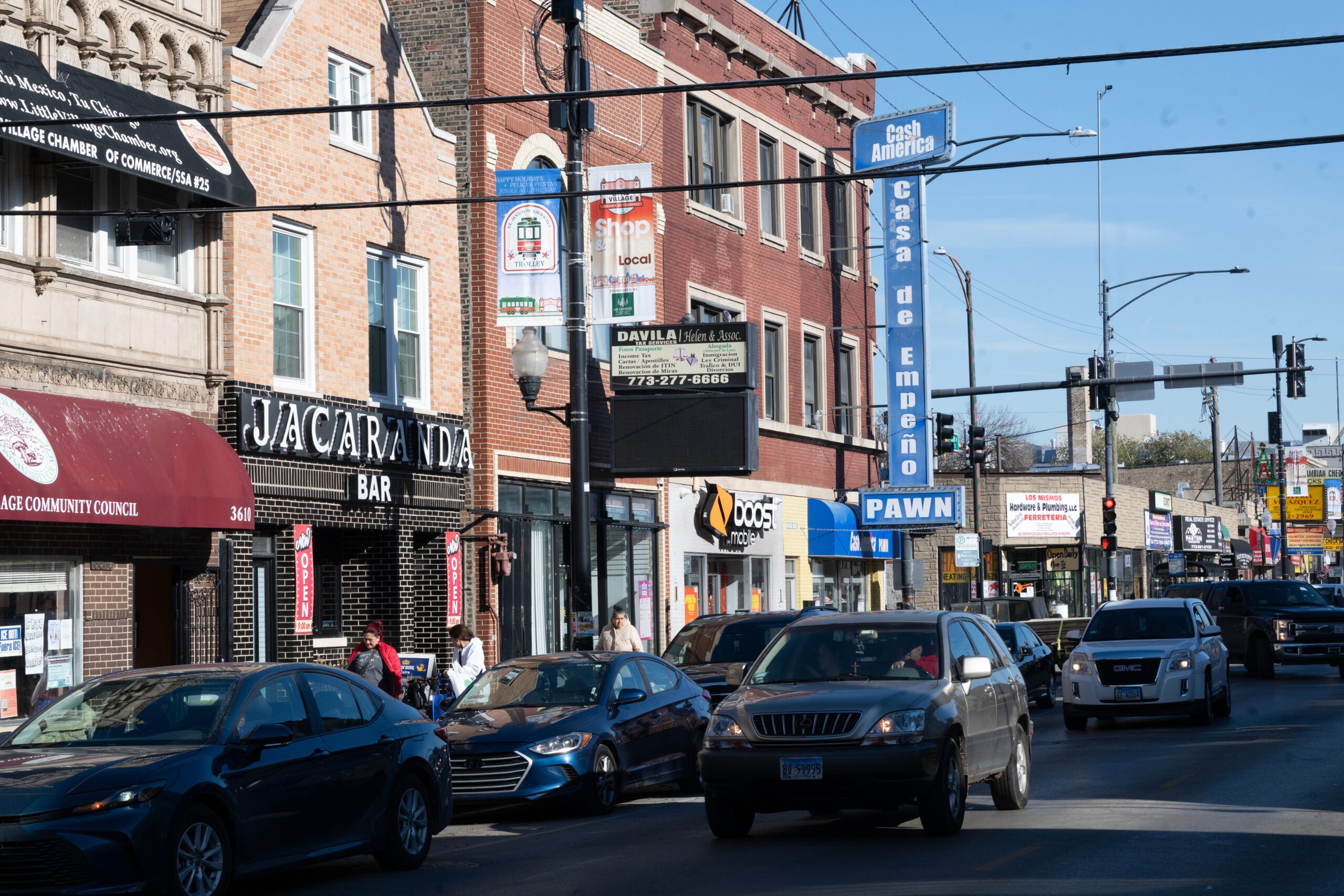
Dávila Tax Services is among a slew of businesses in Pilsen, Chicago, that offer assistance with immigration applications. Image: Marc Monaghan
A similar story played out at the offices of Dávila Tax Services in Little Village, a predominantly Mexican neighborhood on Chicago’s South Side, where the waiting room’s walls were adorned with flyers advertising passport photos, tax preparation, and immigration services. Prospective clients holding numbered slips quietly waited for their turn to speak to Jesús Dávila Jr., who founded the legal-services business 38 years ago and is its president.
In his office, Dávila explained that María might need a waiver, estimated how long she would have to remain in Mexico, and predicted that the process would take three to four years. He also quoted a flat fee of $7,500 for the case. However, he noted that he wasn’t a lawyer and that an attorney in his office, Helen Lesczynski, would be responsible for the case.
In a later phone call with a Weekly reporter, Lesczynski said Dávila had provided “information, not advice,” and denied that the business had acted inappropriately. Dávila “often meets with my Spanish speaking potential clients and tells them a brief summary of the process and pricing structure,” Lesczynski said in a subsequent email.
Immigration raids could worsen the problem
Immigration services fraud is not limited to Illinois. The Weekly and Type Investigations submitted public records requests to state attorneys general in all 50 states to understand the scope of the problem. We found nearly 170 instances of immigration fraud since 2020 in complaints and police reports from 14 states. The other states denied our requests or did not have responsive records.
The records show that hundreds of people across the country claim to have fallen victim to immigration legal services fraud, allegedly losing at least $800,000 in the process. In some cases, individuals said the scammers jeopardized their asylum or immigration cases—risking deportation proceedings.
Data from state attorneys general does not capture the full scope of the problem. In Los Angeles alone, more than 300 complaints of this type of fraud have been filed with the county’s Department of Consumer and Business Affairs since 2012. Victims reported losing more than $400,000.
These findings may be impacted by how welcoming various states are to immigrants. A 2022 study found that in areas that have strong social safety nets and more community-based organizations and experienced immigration lawyers, immigrants are more likely to come forward with accusations of fraud.
Fear, lack of familiarity with the U.S. immigration process, and the acute need for affordable immigration services all make immigrants susceptible to fraud, experts say. And immigration raids by federal agents are likely to exacerbate the problem, as victims may be hesitant to seek help from law enforcement agencies.
“With the aggressiveness of ICE and the apprehension that people have to come out and be public—these notarios are bottom feeders, and they make something bad worse,” Wildes said.
Sometimes, notarios defraud people in immigrant communities by trading on the names and reputations of upstanding organizations. The American Bar Association does not represent clients in court. But Adonia Simpson, deputy director of policy and pro bono at the ABA’s Commission on Immigration, said that more than a dozen people have contacted the organization since President Donald Trump took office in January, claiming that the ABA had agreed to represent them in immigration proceedings.
“We get the paperwork and it’s contracts with our logo and our mailing or D.C. address,” Simpson said. “Individuals are paying thousands of dollars, and essentially, these bad actors are disappearing.”
In New Mexico in 2020, a Catholic Charities worker told authorities she repeatedly heard about two individuals posing as legal services providers near Santa Fe, charging immigrants thousands of dollars to file paperwork they were not qualified to handle. One woman paid several thousand dollars that year for an application that was doomed from the start, only to be denied and placed at high risk of deportation, according to a complaint filed to the state’s attorney general. The staffer added that one of the alleged scammers operated out of an office that formerly housed Catholic Charities, luring clients who mistakenly believed the organization still worked there.
“They are scamming vulnerable people out of a lot of money and putting their lives at risk, especially under this administration,” she wrote in the complaint.
In Houston, Texas, a woman alleged that in 2023 she paid $6,000 to a local immigration services provider who promised her full legal representation in her asylum case but never delivered. According to her complaint to the Texas attorney general’s office, the provider claimed to work with attorneys and assured her that her court filings, work permit and Social Security application would be handled. But no lawyer ever appeared on behalf of the woman, and her asylum application had never been filed, leaving her at risk of deportation.
“I am a victim of notary fraud,” the complainant wrote. The provider could not be reached for comment.
The uncertainty around the law can leave immigrants susceptible to other scams as well. Gwendolyn Estrada, the director of legal services at the Chicago nonprofit Latinos Progresando, said scams have evolved with newer technologies and social media, making them harder for people to detect. She said recent cases involved people being targeted through WhatsApp, TikTok Live, or Facebook.
Some victims even received fake receipts and tracking numbers that looked like they came from USCIS, which made the scams more convincing.
“Immigration sends a letter,” Estrada said. “They’re not going to text you; they’re not going to call you, let alone ask you for money.”
One victim, a 31-year-old undocumented Chicago resident from Oaxaca, Mexico, lost more than $700—all his savings—to scammers posing as police. He asked to remain anonymous because of his immigration status. He told the Weekly and Type Investigations that he doesn’t know how the scammers found his phone number or knew his immigration status. But the calls began in the early afternoon of June 12, 2024 and continued until almost 11:00 p.m. At first, the scammers extracted small bits of information. Then, they said there was a warrant for the man’s arrest, and threatened him with deportation if he didn’t pay them.
“They had already instilled fear in me,” he said. “At that point, I couldn’t control myself anymore.”
The scam left him in a months-long depression that stretched until November. It wasn’t until he learned that his U-visa application, which he had filed in 2022, had been accepted and a work permit was on the way that he began to feel hope again.
“I would work for a bit and then… just sleep. I stopped doing anything, I didn’t care about anything anymore, it was just sleep. And sometimes I’d just think…that’s it.”
Enforcement is inconsistent
Amato Lough said one of the most frustrating realities she’s witnessed is law enforcement’s reluctance to act. One of her clients, María Gutierrez Aragón, was an immigrant from Oaxaca, Mexico, who was manipulated by a trusted family acquaintance. The notario, Fidel Marquez Cortes, defrauded Gutiérrez Aragón of tens of thousands of dollars over the course of a decade.
Gutiérrez Aragón explained that the fraud began when she suffered domestic violence from her long-time partner, an experience that left her vulnerable and searching for safety. Marquez Cortes stepped in by presenting himself as a trusted “legal representative” who could quickly fix her immigration status, she said. He devised various schemes to defraud Gutiérrez Aragón, she said, including threats of taking her children. Eventually, he started stalking her, Gutiérrez Aragón alleged.
Gutiérrez Aragón contacted the Los Angeles Police Department in 2011, but she and Amato Lough say they had to pressure the police to take a report. A judge eventually ordered Marquez Cortes to pay restitution of $66,000 in restitution and serve one year in county jail if he completed the payments, or two years in state prison if he failed to do so. Within weeks, Marquez Cortés had fled to Mexico. The Mexican authorities later arrested him, but he has not been extradited to the United States.
Gutiérrez Aragón’s case illustrates both the scale of financial devastation and the difficulty of holding bad actors accountable. Scammers are “able to operate with impunity because there is such a lack of enforcement against notario fraud,” Amato Lough said.
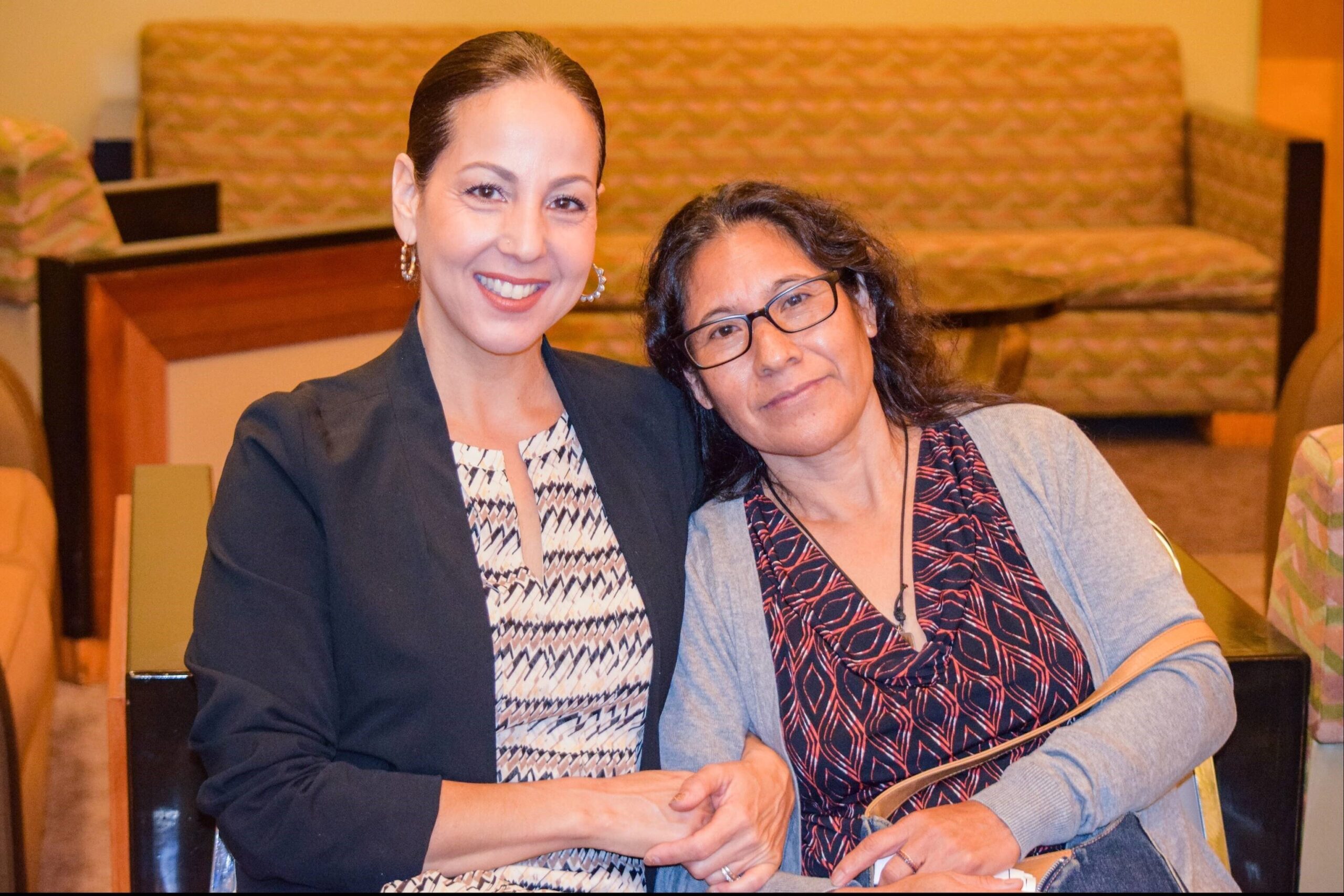
L.A. attorney Gina Amato Lough (left) and her client María Gutierrez Aragón, who was defrauded of tens of thousands of dollars over a decade.
Image: Courtesy of Gina Amato Lough
Law enforcement’s reluctance and lack of resources make prosecution rare, even when victims provide receipts or multiple testimonies, she said. The public records we reviewed also revealed that authorities across the United States deal with this problem unevenly. In some states, such as Utah and Texas, law enforcement agencies have undertaken criminal investigations into notario fraud. In others, it’s unclear what, if any, action was taken after complaints were filed.
The Illinois attorney general’s office said it reviews every consumer complaint and provides recommendations for next steps, including calling the police or pursuing the matter in small claims court. If individuals feel that a lawyer has acted inappropriately, they can also file a grievance with the Attorney Registration and Disciplinary Commission, which can send cease-and-desist letters to alleged perpetrators.
In Chicago, individuals can also file complaints with the Department of Business Affairs and Consumer Protection. Public records indicate that, between 2019 and 2024, BACP issued fines to two businesses, and one individual affiliated with a third, for alleged violations of city laws related to immigration services.
BACP also said it combats notario fraud through investigations and its “Be Informed. Be Protected” campaign, which includes a series of informational flyers.
One of the flyers, available online in English, Spanish, Arabic, Korean, and Polish, spells out consumer rights and warns immigrants that notarios are not attorneys and cannot provide legal advice. It explains that immigration services providers must give clients written contracts, disclose all costs up front, return documents when work is complete, and allow clients to cancel agreements within 72 hours. The flyer also cautions against overcharging, noting the maximum fee for filling out a government form is $75, and directs consumers to report fraud through the city’s 311 system.
But it remains unclear where, or even if, those flyers are posted in neighborhoods most likely to be affected by notario fraud.
Sometimes, state officials conduct rigorous investigations and involve law enforcement to bust notario fraud schemes or use lawsuits to win the victims restitution. In Washington, the attorney general’s office won nearly $230,000 in 2023 after filing a state lawsuit for victims of a Seattle business preying on Brazilian immigrants. In 2022, law enforcement agents in Utah interviewed more than 31 victims of two different immigration fraud schemes before they ultimately nabbed the alleged perpetrators. That same year, a Chicago woman, Aracelia Domínguez, was convicted of stealing nearly $100,000 from victims by posing as an immigration attorney.
Sisters Norma Sereño Martínez and Erika Mesa, who paid Domínguez nearly $8,000 to handle Martínez’s residency case, said that despite learning about the conviction, they never really got closure. The fraud caused them emotional as well as financial losses, and when they initially reported it to police, officers were unhelpful. At one point, they attempted to visit Domínguez in prison to get some answers or an apology, but were turned away.
“The only two things I wanted to ask were, ‘Why did you defraud me? And what did I ever do to you?’” Martínez said. “If you needed money, you could have asked me. I would have helped you. But outright theft like this—that is unforgivable.”
Wildes, the immigration attorney, who is also the mayor of Englewood, New Jersey, and a former federal prosecutor, said that public officials should do what they can to raise awareness about notario fraud and prosecute people who take advantage of immigrants.
He advised that immigrants should make sure anyone they’re seeking legal assistance from has a license to practice and “that there should be an immediate flag that you’re being taken advantage of” if they have another third-party lawyer sign off on the paperwork without ever having personally met with the attorney.
“Be careful who your representative is,” he said. “When it comes to lawyers and doctors, they have to go with the best, because you have one shot to do this.”
More than a year and a half into her life in Chicago, the Venezuelan woman who lost $500 to scammers is trying to get her case back on track with the help of a pro bono attorney. She said her only goal is to secure legal status in the U.S. so she can give her children “a good future, so they can study here.”
She warned others in the immigrant community not to put their faith in notarios.
“People should really get proper advice first, before starting their case,” she said. “Because when you come to a new country, you don’t know how things work, the laws, and you let yourself be guided by the first things people tell you.”